

It’s time to kill the MCU
It'southward time to kill the MCU
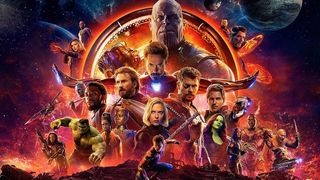
The Marvel Cinematic Universe has had a skilful run. Between 26 films, xvi TV shows and any number of smaller spinoffs, the MCU has dominated both big and small screens ever since Iron Man debuted dorsum in 2008. This project singlehandedly rewrote the rules for Hollywood blockbusters, and took superheroes from niche to mainstream.
In short, the MCU is on top of the world. And that's why it should quit now, while information technology'south ahead. (For an alternate point of view, see why The MCU should not be killed.)
While there'southward no denying that the Marvel Cinematic Universe has had profound effects on both the motion-picture show business and pop civilisation in general, there's also no denying that the project has become unwieldy and aimless. The MCU delighted fans by staying truthful to the Marvel comics formula. But in so doing, it likewise managed to recreate everything wrong with Marvel comic books — and in approximately a 5th of the time.
What makes the MCU work
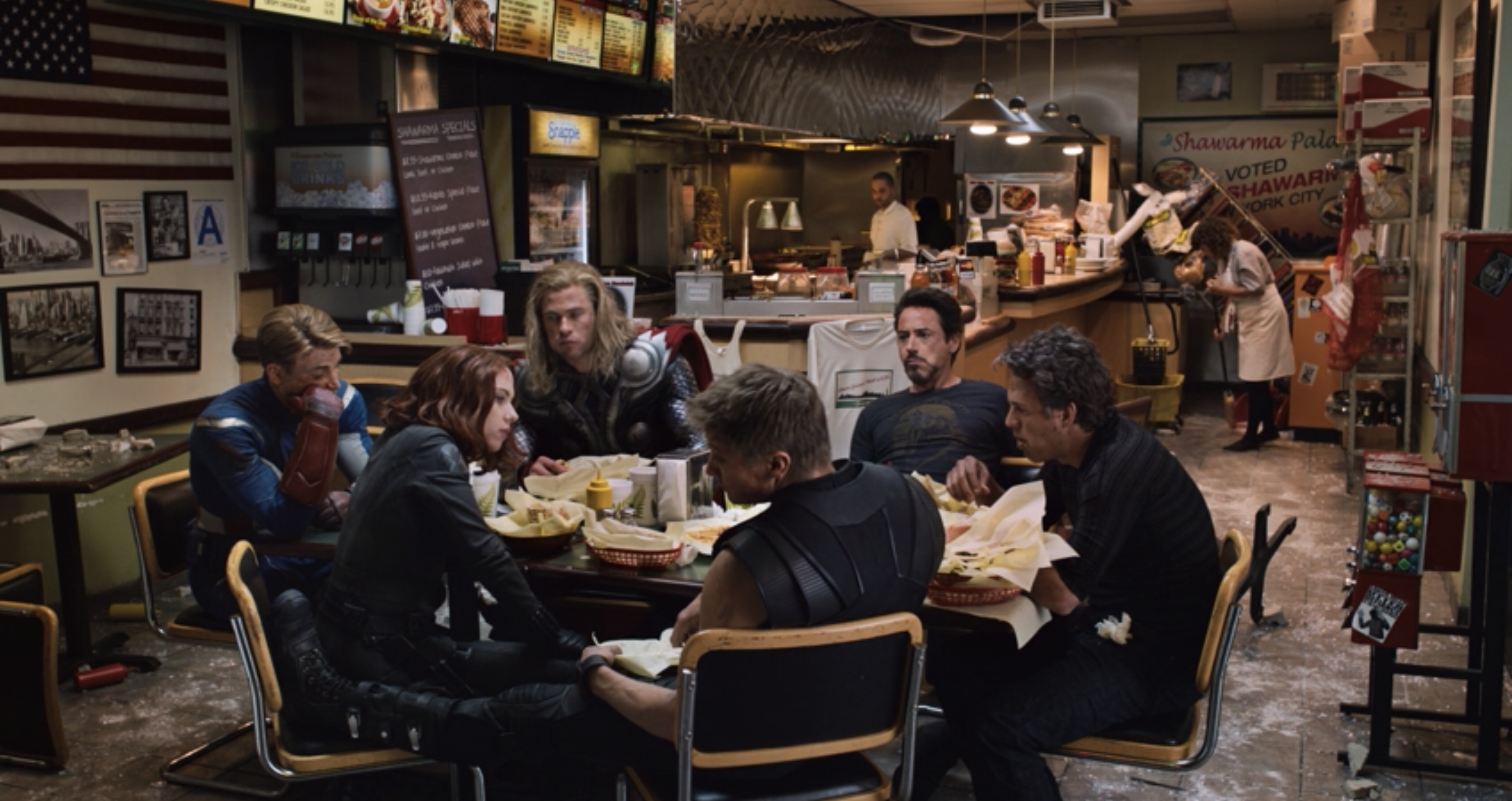
Before nosotros swoop in any further, I should explicate that I accept nothing against the MCU. In fact, I felt heavily invested in it for a time. I thought that Phase one of the MCU comprised some of the well-nigh accurate onscreen depictions of comic book superheroes I'd ever seen, and that The Avengers (2012) was unlike anything I'd seen on a big screen before. I even dedicated more than 250 hours of my own costless time to watching the MCU TV shows, which you lot admittedly should not practice.
I followed the MCU films upward until Avengers: Endgame, which was an aggressive-but-flawed decision to an aggressive-but-flawed experiment.
Without rehashing the whole MCU projection from scratch, it'south not too difficult to encounter why it'southward worked well so far. (And if you oasis't seen them all yet, then here's how to picket the Marvel movies in social club.)
Marvel Studios matched beloved characters with charismatic actors, then adapted fan-favorite comic book stories, making smart adjustments to fit the characteristic film format. Granted, other superhero movies had done this before. What set the MCU apart was its keen heart for continuity and crossovers, just like the comics that inspired it.
The only problem is that the MCU achieved its goal correct out of the gate. Iron Homo, The Incredible Blob, Helm America and Thor were all entertaining (and sometimes legitimately excellent) films, and set up the stage perfectly for a big crossover spectacle. The Avengers delivered almost flawlessly on that premise, delivering well-written banter, unexpected plot twists and memorable action set pieces from start to stop.
Still, as any comic book fan can tell y'all, large crossover events have diminishing returns. The trouble with the MCU is that what began as a moonshot team-up project became something much more formulaic and predictable over time. Think about how many boosted origin stories nosotros've had to sit through since The Avengers, and how many sequels wound up spinning their wheels until the next big crossover movie.
Retrieve, too, almost how many of these films actually did something clever or unexpected with the superhero formula. Information technology's non many. Even the movies that tried, such as Eternals, didn't necessarily pull it off well.
Worse all the same: the bodily movies and shows became most totally ancillary to keeping people interested in the MCU. Instead, the whole project has become a race to come across who can identify the most references and judge the adjacent potential plot points as quickly equally possible. (Bonus points if you work for a major magazine, and tin can garner a lot of clicks from doing so.) When the adjacent MCU project debuts, go ahead and keep an middle on how much coverage grapples with the movie or testify's themes and storytelling, and how much coverage points out Easter eggs or speculates on when the X-Men are going to testify up. It's a superficial way to engage with the media nosotros consume, but it's what the MCU has trained u.s. to do.
Inspired by Marvel comics
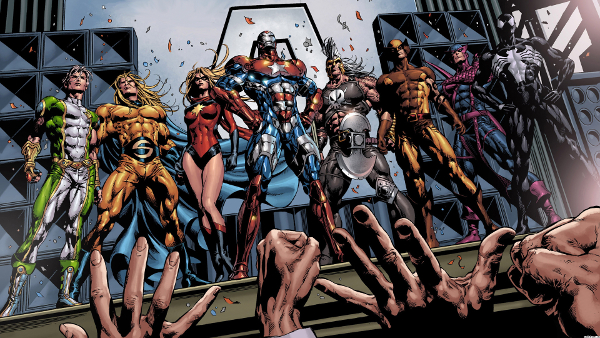
Nevertheless, I would debate that none of these problems is unique to the MCU. In fact, in seeking to recreate the benefits of Curiosity comics, the films and shows (possibly accidentally) recreated their detriments too.
To give some context here: My introduction to the wide world of Marvel was through X-Men: The Animated Serial back in the early on '90s. For five seasons, the show wove a circuitous (for kids, anyway) web of characters and relationships, occasionally bridging the gap between the X-Men and other heroes, such equally Spider-Human, Dr. Strange and Ms. Curiosity. After I revisited the show in loftier schoolhouse, I was determined to read the comics immediate and go along the story.
The just problem was that afterward a trip to my local comic volume store, I had no idea where to first. Stories in Marvel comics aren't self-contained adventures that wrap up inside a few years, like the Ten-Men drawing. Instead, Marvel continuity ran all the way back to the very beginning issue of Fantastic Iv in 1961. (And, truthfully, some of the stuff before that — merely not all of it!) The canon comprised thousands upon thousands of stories, characters and events, some of which contradicted each other, and most of which simply weren't accessible anymore.
Nevertheless, I did the best I could, consulting proto-wikis and bulletin boards, and learning where the current storylines started. I eventually caught upward enough with the X-Men, the Avengers, and a few other heroes to empathize the nuts of what was going on. Then, Avengers: Disassembled happened, and I learned how Marvel handles big crossover events.
Without going into tremendous detail, Marvel has yearly(ish) crossover events, which shake upwards the status quo in the Marvel Universe and usually terminate with a huge battle against some kind of cataclysmic threat. Avengers: Disassembled was the kickoff one I read, and I quickly realized that merely reading the monthly Avengers comic wasn't enough. To get the full story, I also had to read (and, of form, purchase) monthly issues of Fe Human, Captain America, Thor, Fantastic Four and Spider-Human. It was a lot of actress information — and a lot of extra money.
I followed this cycle for a few years, throughout House of Thousand, Civil State of war, Siege and Fearfulness Itself. Some crossovers were better than others, but each ane of them involved a ton of backstory, a ton of side stories and a ton of follow-upwards stories.
Eventually, I had a realization: The constant worldbuilding-upon-worldbuilding (at ever-increasing expense) was never going to end. I'd become incredibly invested in the story, just Marvel was never going to provide catharsis. If I wanted an catastrophe, I'd simply have to pick a stopping indicate myself.
In other words, Marvel comics have spent 60 years creating a messy, labyrinthine, impenetrable mythos, with a steep onboarding cost (in terms of both time and coin), and no piece of cake manner to become out. The MCU has washed the same, but this time around, the process took just a decade.
Equally I write this, the MCU is on track to release 9 projects in 2021: four movies and 5 Tv series. Check out our Disney Plus Day recap for more info. While viewers can admittedly option and cull which ones they want to watch, you'll probably demand to see them all in order to become the "full" story. The question is: What's the point of getting the full story? The MCU seems poised to grow and grow and grow, just similar the comics, until keeping track of its tangled mythology will be incommunicable, save for a few hardcore continuity chroniclers.
End with a bang
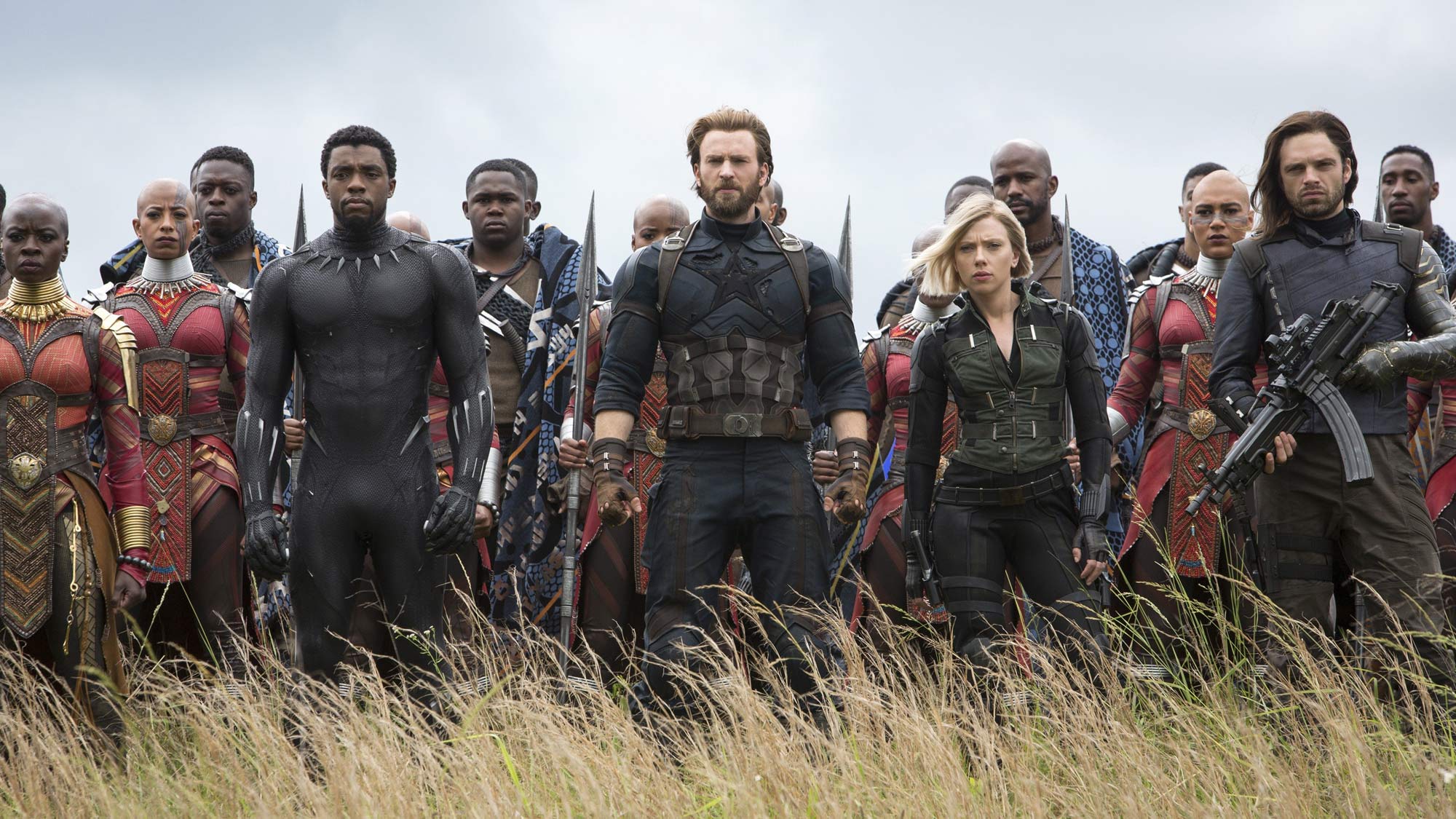
What, and so, is the alternative? To my mind, it's simple: End the MCU project earlier it gets too tangled and unmanageable. Monthly comics are as well far gone for that solution; we're stuck with unresolved stories and diminishing returns on crossovers forever. But shared-universe movies are new enough that the MCU could feasibly still end things on a high note.
I don't know exactly how the MCU could pull this off. I'm not a managing director, or a producer, or a screenwriter. But I do know that the MCU lost me for the same reason that Marvel comics lost me, after enjoying both for quite a few years. Monthly comics await readers to come and go over time, and mayhap the MCU is banking on that strategy equally well. Only edifice upward to a single, definitive catastrophe would be both more satisfying and more daring. We already know that superhero stories can essentially go on forever; attempting to end one for adept is a tougher challenge.
I'll stop with a few thoughts on Avengers: Endgame. As I stated, I didn't have strong feelings about the pic one fashion or another. But a few months later, I institute myself rewatching episodes of Arrested Development and Community: two sitcoms that Endgame directors Joe and Anthony Russo worked on before transitioning over to the MCU.
I was absolutely floored by how clever, creative and delightful these shows felt. The Russos pushed the traditional sitcom format to its breaking point, relying on asynchronous storytelling, continuity-heavy gags and some genuinely disconcerting subject matter. Then I idea dorsum to Endgame: overlong, overly serious and just a trivial bit full of itself.
The MCU started potent. All that's left now is to let it finish strong.
- Next: No, it's not time to kill the MCU — information technology'southward a spectacular mess

Source: https://www.tomsguide.com/opinion/time-to-kill-mcu
Posted by: harrisonprave1991.blogspot.com
0 Response to "It’s time to kill the MCU"
Post a Comment